
Tutorial 02 · 5 min

Generate, verify, and revise

Turn selected objectives into a document you can inspect—not a black-box summary.

1. Start the generation plan

Select one or more topics and choose Generate. Flante shows one adaptive time estimate and explains when an unusually large topic or an additional evidence check adds time.
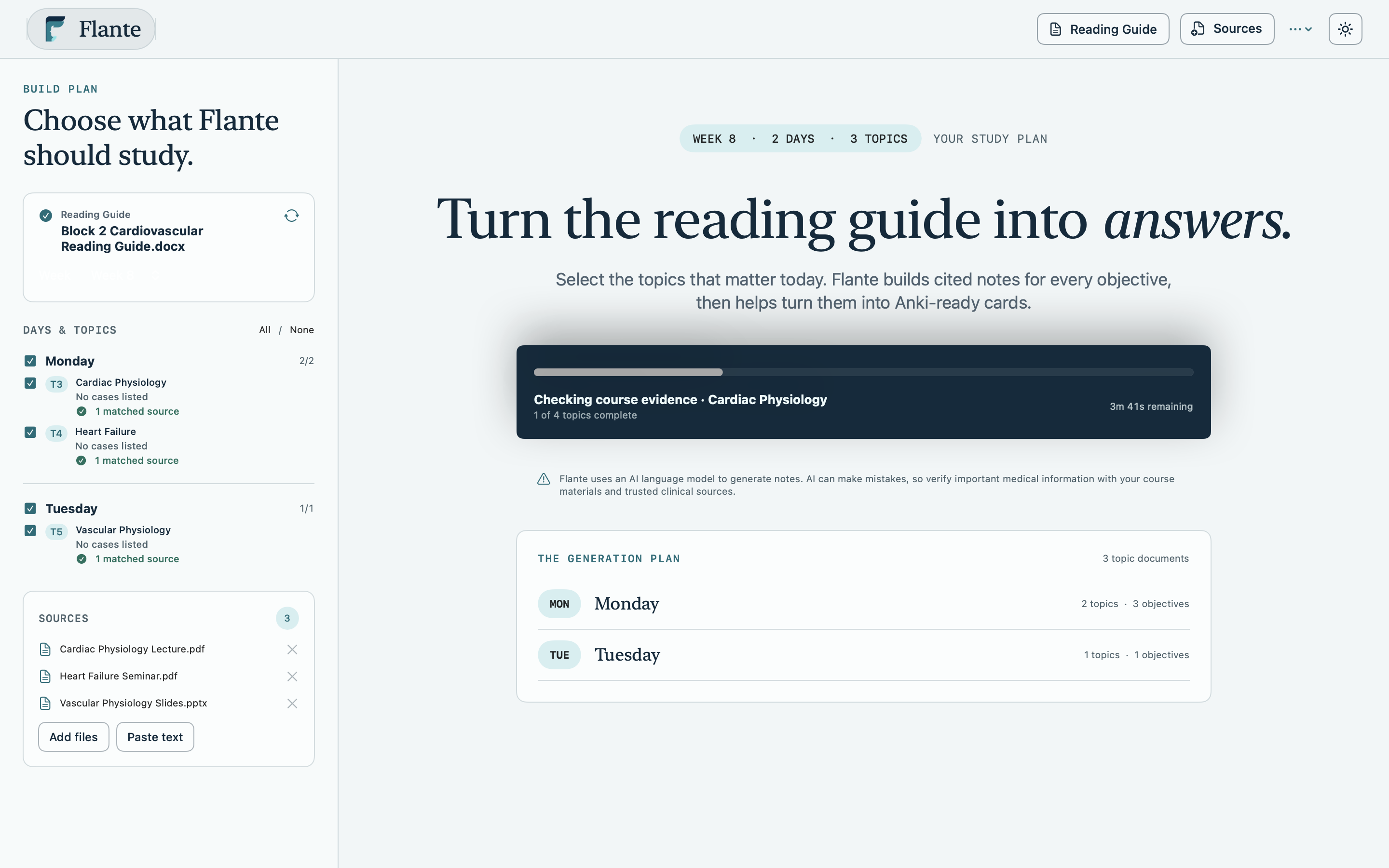
Flante actively checking course evidence with topic progress and a remaining-time estimate
Actual Flante appFlante actively checking course evidence with topic progress and a remaining-time estimateOpen full size ↗

2. Read the coverage view

Start with the source key and coverage-at-a-glance table. Every numbered objective has its own teaching structure, citations, and completion status.
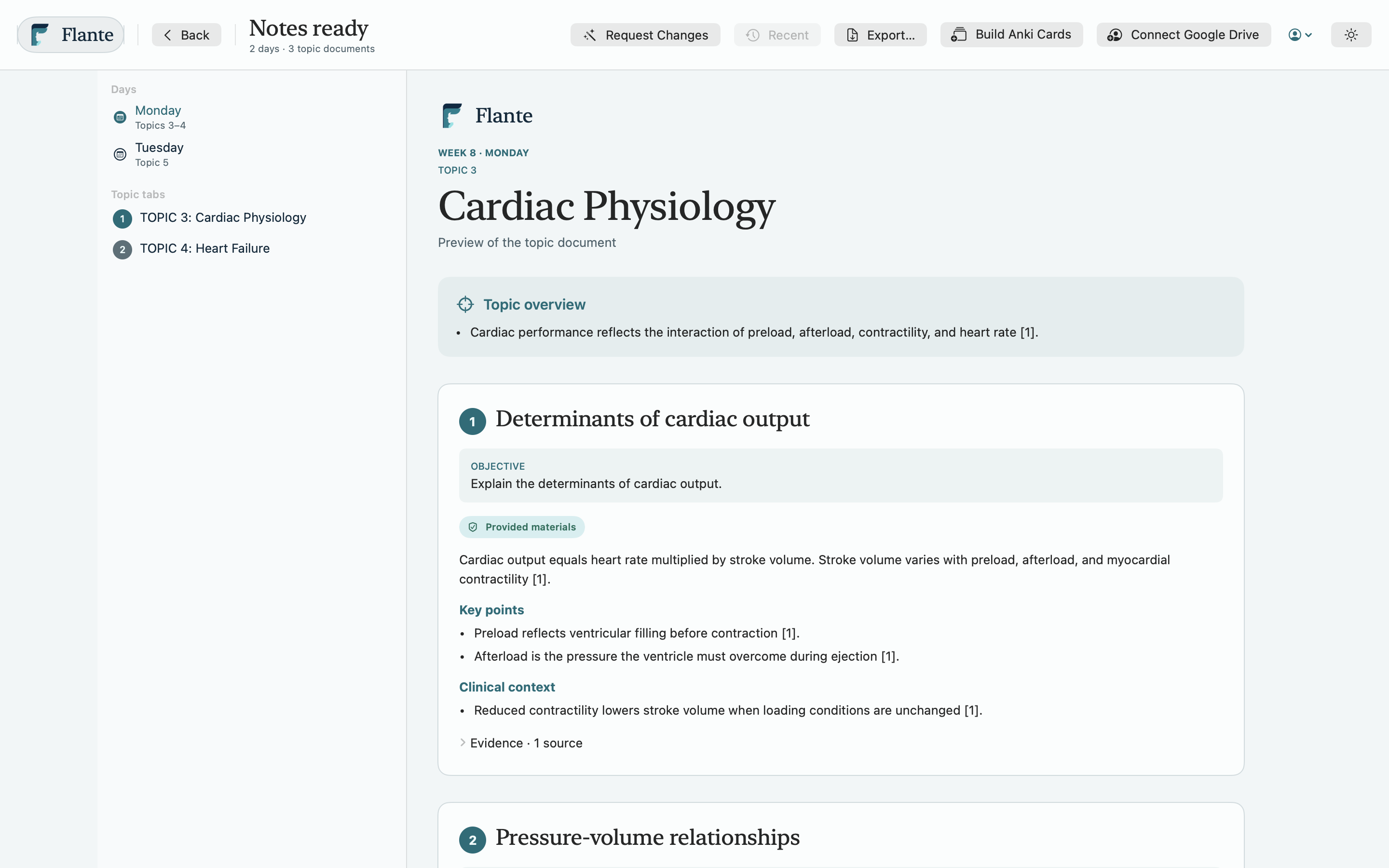
Generated Flante notes with numbered objectives, teaching points, and completion status
Actual Flante appGenerated Flante notes with numbered objectives, teaching points, and completion statusOpen full size ↗

Good to know: Flante never silently substitutes external literature for your course material. The evidence origin stays visible in the preview and export.

3. Understand evidence labels

Course-supported content points to imported sources. When those sources cannot support part of an objective, Flante can use NCBI Bookshelf, StatPearls, PubMed reviews, or guidelines and labels that material External medical literature.
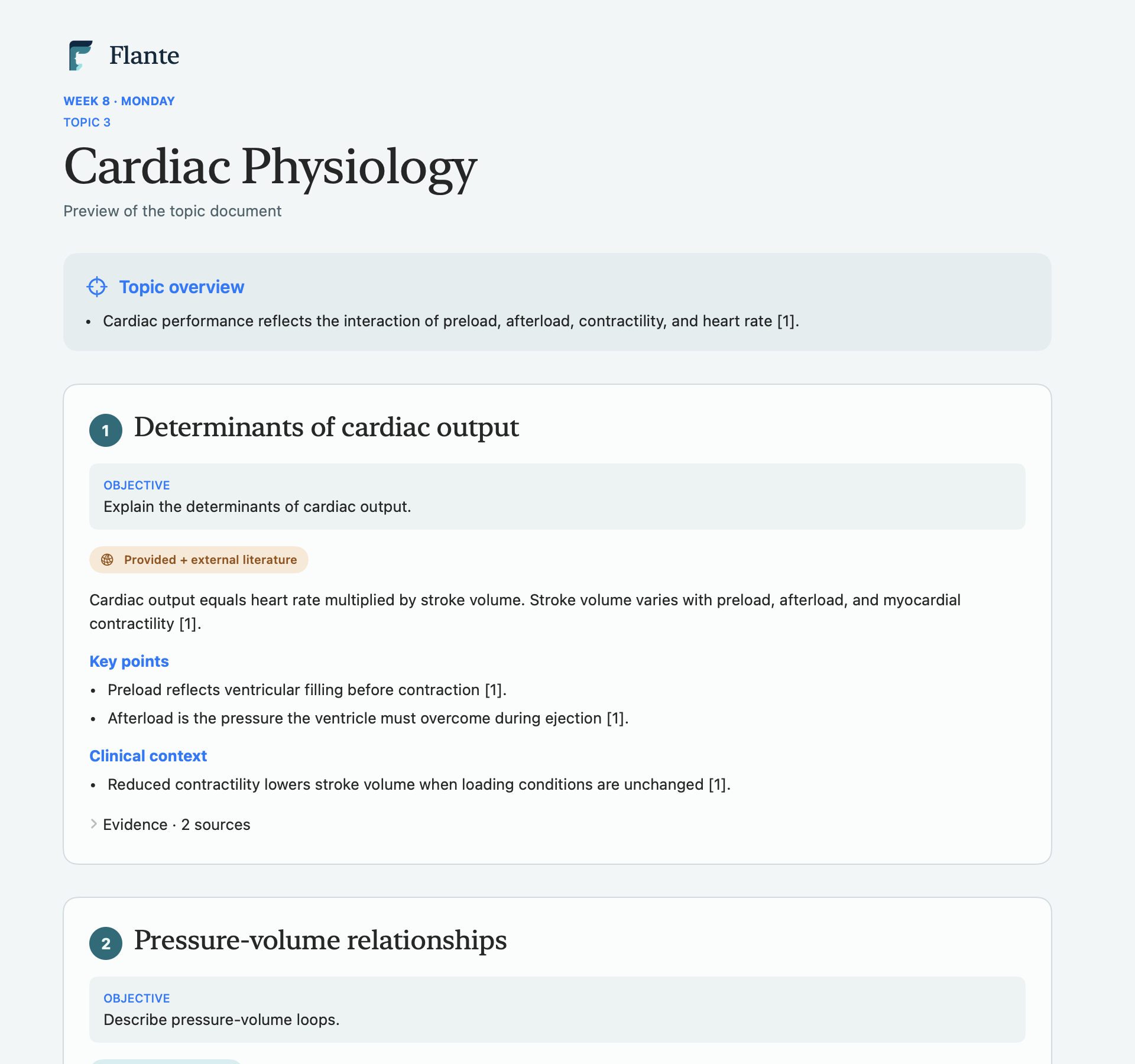
A generated objective marked Provided plus external literature with two evidence sources
Actual Flante appA generated objective marked Provided plus external literature with two evidence sourcesOpen full size ↗

4. Request a revision

From the topic preview, describe the change you want in plain language. Flante revises the draft while preserving still-correct content, citations, and full objective coverage.
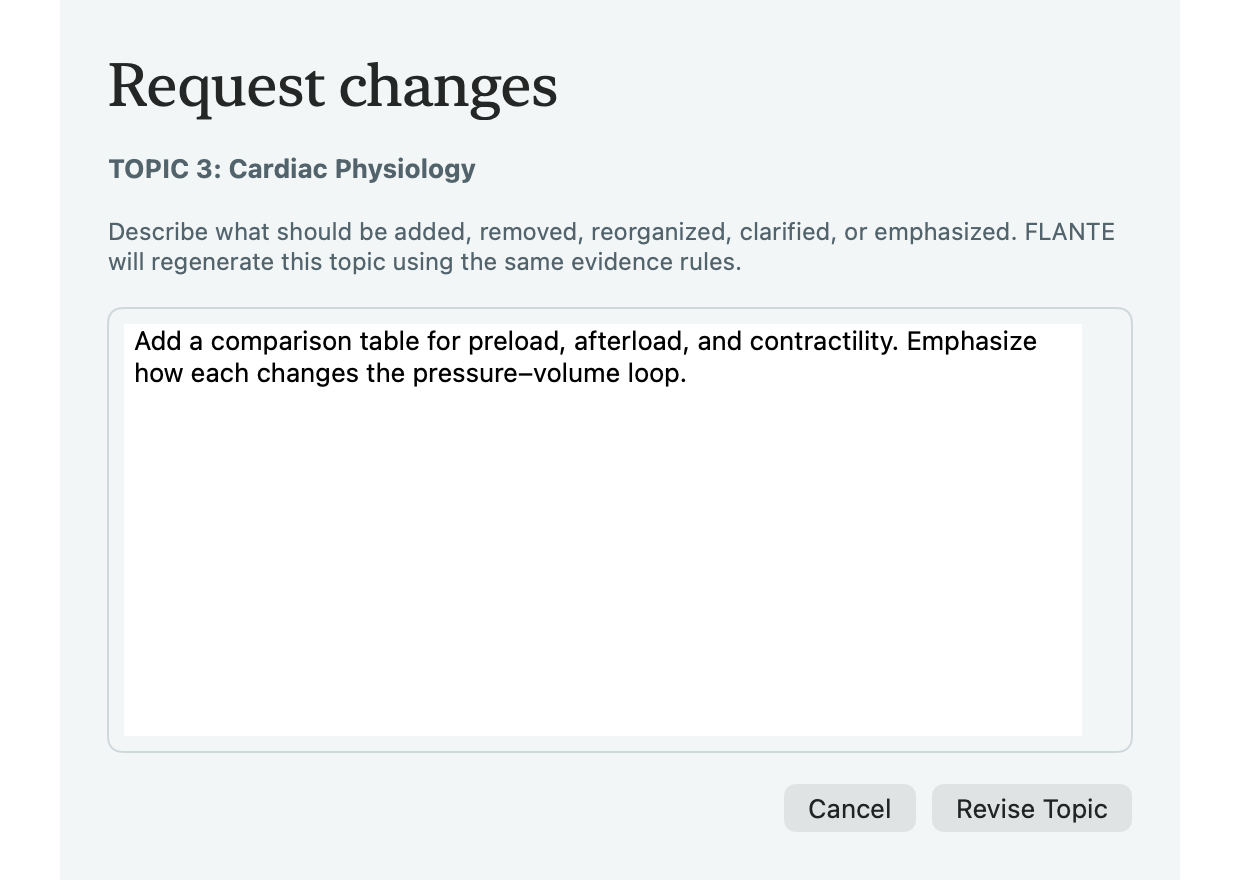
The Request changes dialog with a specific pressure-volume-loop revision entered
Actual Flante appThe Request changes dialog with a specific pressure-volume-loop revision enteredOpen full size ↗

Ready for the
next step?

All tutorials